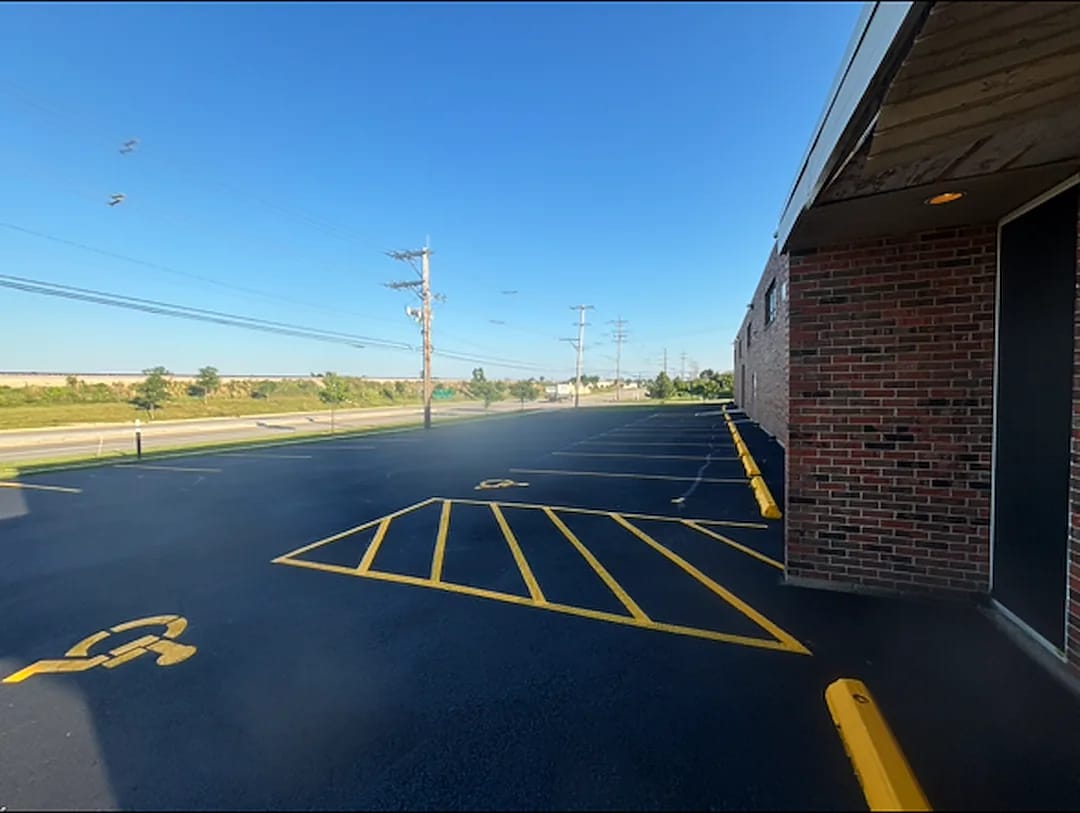
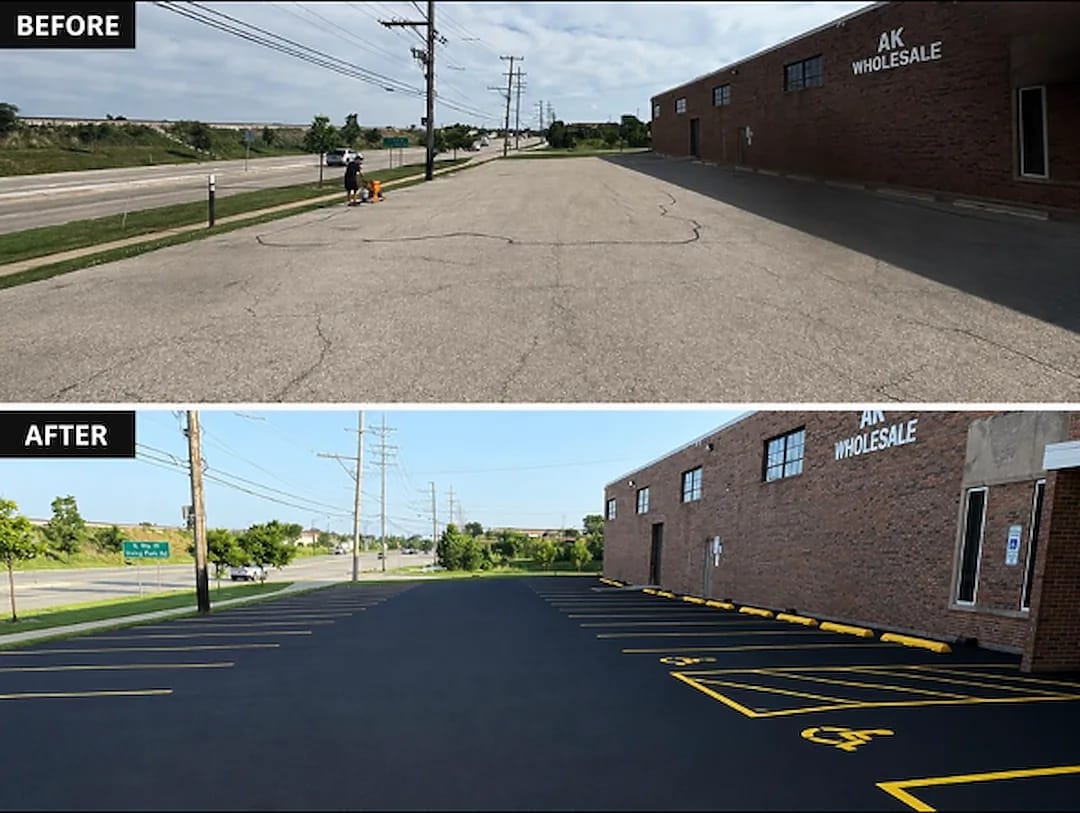
The single highest-value thing you can do for a Chicago parking lot before winter is seal the cracks. Everything else on the autumn checklist matters, but crack sealing is the one that decides whether you spend spring restriping or patching. Water in a crack freezes, expands, levers the crack wider, thaws, and does it again — dozens of times between November and March. A crack sealed in October does not spend the winter being jacked open.
The rest of this is the checklist we walk with property managers each autumn, and the scheduling reality that catches people out.
Why freeze-thaw is the whole story here
Asphalt fails from the top down and from water in. In a mild climate that is a slow process. In Chicagoland it is not.
The mechanism is simple. Water enters through a crack or a porous, oxidised surface and sits in the base. When it freezes it expands by roughly nine per cent, which pushes the surrounding material apart. When it thaws it drains a little deeper, and the void it leaves is slightly larger than before. Repeat that through a winter of temperatures crossing freezing point again and again, and a hairline crack becomes a wide one, a wide crack becomes a pothole, and a saturated base loses the load-bearing capacity the surface depends on.
This is why the same lot ages differently here than it would further south, and why national maintenance intervals tend to be optimistic for Chicago properties.
Salt compounds it. De-icer keeps water liquid at lower temperatures, which means more freeze-thaw cycles rather than one long frozen period, and the brine carries further into the surface. It is also abrasive as it is tracked around under tyres, which is why markings near entrances wear first.
The autumn checklist
Work through this before the first hard freeze. In Chicago that means having the work done by late October or early November in a normal year.
- Seal every working crack. Hot rubberised filler, into cracks that have been cleaned and blown out first. This is the priority item and the one with the shortest window.
- Patch potholes and failed sections. A pothole going into winter will be a bigger pothole coming out of it. Cut out, compact, fill with hot mix.
- Clear the drainage. Catch basins, grates and swales. Standing water that cannot drain is standing water that will freeze in place, and repeatedly.
- Check kerbs, wheel stops and bollards. Anything loose will be caught by a plough. Anything already damaged should be replaced now, not in January.
- Mark the hazards before they are buried. Kerb ends, islands, wheel stops and low bollards disappear under snow. Faded yellow kerb paint is a plough-damage claim waiting to happen.
- Photograph the lot. A dated set of photos before the season is genuinely useful if you later need to establish what plough damage is new.
- Agree snow storage locations in writing with your snow contractor. More on this below, because it is the item most often skipped and it has compliance consequences.
- Confirm your contractor's plough edge. A rubber or polyurethane cutting edge is materially gentler on markings than steel.
Snow storage: the item everyone skips
Where the snow goes is a decision. If you do not make it, your plough operator will, and they will make it based on what is convenient at 4am.
Two places snow should not go.
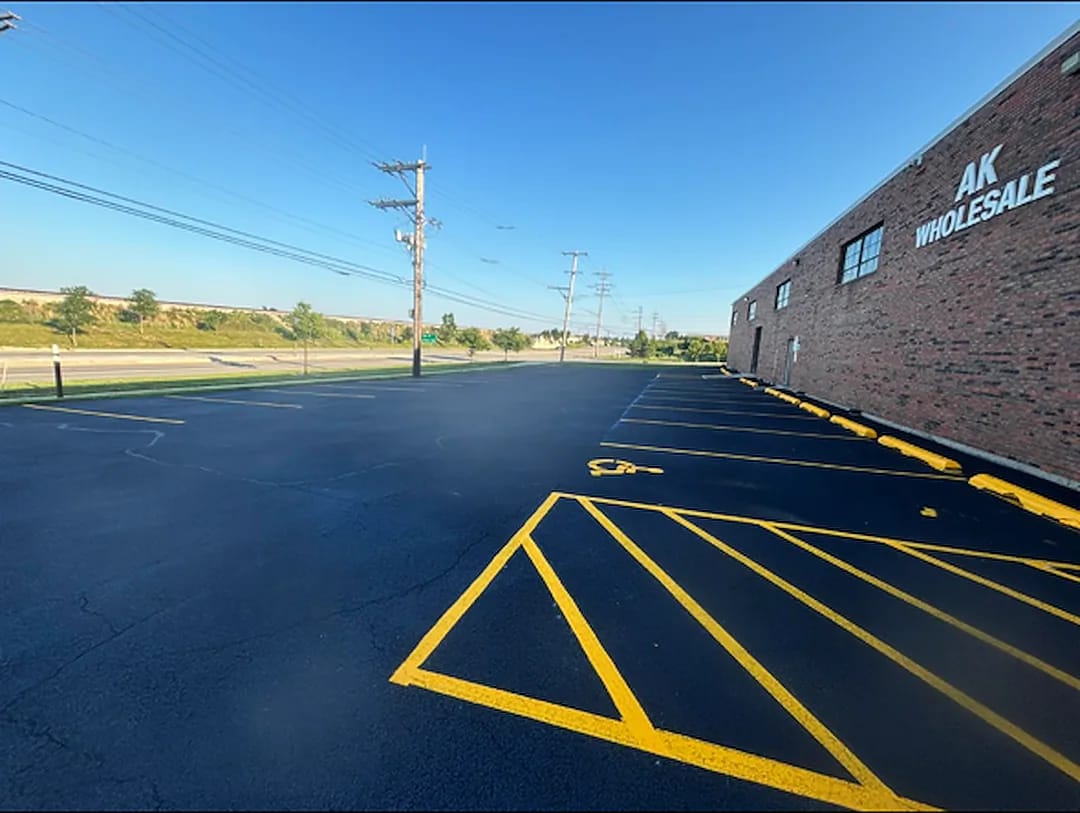
Access aisles. They are conveniently empty, adjacent to the kerb, and exactly the wrong choice. An access aisle full of snow is an unusable accessible parking space, and that it will be usable again in April is not much comfort to somebody who needs it in January. Put the permitted snow storage locations in the snow contract explicitly.
Over drainage. A pile sitting on a catch basin melts slowly and refreezes across the surrounding surface, which turns a drainage point into an ice sheet. Pick storage locations that drain away from traffic and pedestrian routes.
Also think about what the pile does when it melts. Meltwater running across a lot and refreezing overnight is the origin of most car park slip claims, and it is entirely a function of where the snow was put.
Markings that survive a plough
If you are marking a lot in the autumn, material choice matters more than it does in spring.
Thermoplastic is heat-applied and much thicker than paint. It stands up to plough contact far better and is what we specify for entrances, drive aisles and anywhere tyres scrub the same line. It is more expensive per foot, which is why it belongs in the high-wear areas rather than across an entire lot.
Water-based traffic paint remains the right call for the majority of stall lines. It is a maintenance item — you expect to refresh it — and trying to make an entire lot plough-proof is not good value.
Raised markers and delineators need thinking about before winter. Anything standing proud of the surface is something a plough can catch. Where you need delineation through the winter, flexible posts survive contact far better than rigid ones.
The practical approach is to spend the durable material where the wear actually is, and accept that open stall lines are a two-year cycle. That is the same logic we apply to parking lot striping and layout generally.
The scheduling problem nobody plans for
Here is the part that catches property managers out every year.
Traffic paint needs a dry surface and reliable temperatures. Sealcoat needs surface temperatures above roughly 50°F and a dry 24 hours to cure. In practice that gives Chicago a working season of roughly April through October for coating and striping.
Two consequences.
Autumn books out. Everyone realises in September that they should have sealed their cracks, and there is a narrow window before temperatures drop. The last few weeks of the season are the busiest of the year.
If you miss it, you wait. A lot that becomes unreadable in December is not getting restriped in December. You are living with it until spring — and spring books out too, because everyone who missed autumn is now competing for April.
Crack sealing has a somewhat wider window than coating, which is worth knowing: even when it is too late in the season to sealcoat, sealing the cracks is usually still possible and is still the highest-value item. Do that now and coat in spring.
What to do in spring
Winter tells you things about your lot. Walk it as soon as the snow is gone and note:
- New cracks, and old cracks that have widened. These are your priority for the next round of sealing.
- Potholes, and specifically whether they are in the same places as last year. Recurring potholes in one spot mean water is still getting into the base nearby.
- Plough damage to kerbs, wheel stops and bollards. Compare against your autumn photographs.
- Marking wear, particularly perpendicular to the plough direction and around entrances where salt collects.
- Where the ice formed. That tells you where the water goes, which is more useful than any drawing.
That walk-round is what sets your spring scope, and doing it early is what gets you a good slot in the calendar rather than a July one.
What this means for your property
Autumn work is cheap and prevents expensive spring work. That is the whole argument, and it is a strong one in Chicago specifically because of how hard freeze-thaw is on asphalt here.
Three things, in priority order:
- Seal the cracks before the first freeze. If you do nothing else on this list, do this one.
- Put snow storage locations in the snow contract, explicitly excluding access aisles and drainage.
- Book early. The end of the season is the busiest part of it, and missing it means waiting until spring.
If you want the lot looked at before the season closes, we will walk it, tell you what genuinely needs doing before winter and what can wait until spring, and quote it itemised. See pavement repair and sealcoating, or call (773) 858-1077 and describe the property.