Service
Pavement Repair & Sealcoating in Chicago
Crack sealing, pothole repair and sealcoating that keep water out of the base — the difference between maintenance and a repaving bill.
The problem
What it costs to leave it
Asphalt fails from the top down and from water in. A crack is not a cosmetic problem: it is a path for water into the base, and in Chicago that water freezes and expands dozens of times a winter until the base breaks up.
Once the base is gone, sealcoating cannot save it — you are into patching or an overlay, at many times the cost. The window where cheap maintenance still works is measured in a season or two.
Sealcoating is protective, not structural. Done at the right time it slows oxidation, keeps water out and makes fresh striping look sharp. Done over failing pavement it just hides the problem for a few months.
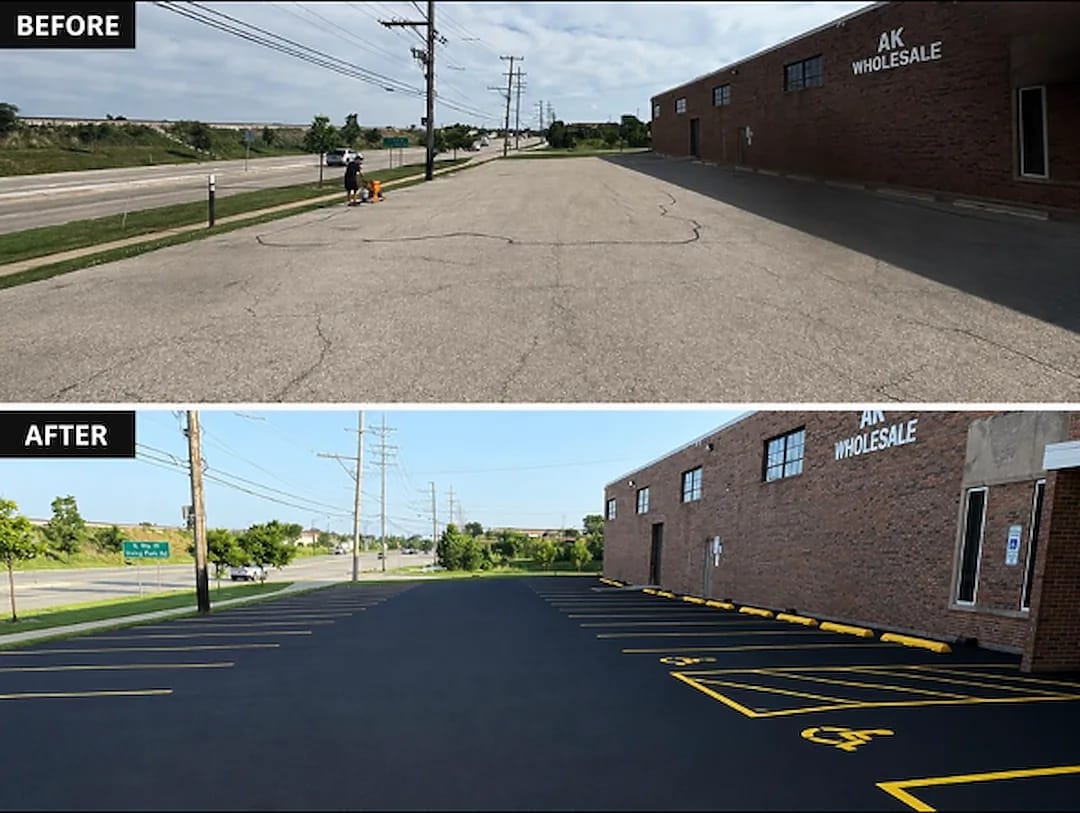
Before and after: crack seal, sealcoat and restripe
What's included
Line items, not vague promises
Every quote is itemised against this list, so you can see exactly what you are paying for.
- Surface assessment that tells you honestly whether sealcoat is the right call or a waste of money
- Hot rubberised crack sealing in all working cracks, cleaned and blown out first
- Pothole cut-out and hot-mix patching with compacted edges
- Two-coat asphalt emulsion sealcoat, squeegee-applied at edges and spray-applied across open areas
- Oil-spot priming so the coating bonds where it otherwise would not
- Full restripe once the coating has cured
Our process
Four steps, no surprises
You get a fixed written price before anything starts, and a walkthrough before we leave.
- 1
Free Site Visit
We walk the lot, measure it, and note surface condition, drainage and current stall count.
- 2
Written Quote in 24 Hours
A line-itemised scope and price — materials, stall counts and timeline, with no obligation.
- 3
Scheduled Work
Most jobs start within 3–5 days. We phase the work so sections of your lot stay open.
- 4
Final Walkthrough
We inspect every line with you before we leave, and confirm cure times before you reopen.
Materials & standards
The right product for the traffic it takes
Crack sealing comes first, always
Hot rubberised filler goes into working cracks before any coating. Sealcoat over an unsealed crack is a wasted coat — the crack keeps moving and reopens through it within a season.
Asphalt emulsion sealcoat
A protective coating that shields the surface from UV oxidation, fuel and water. It restores the black finish and gives striping a clean base. It does not add structural strength, and we will tell you when a lot needs more than a coat.
When we recommend resurfacing instead
Interconnected "alligator" cracking, spongy areas underfoot or potholes that keep coming back in the same place all point to base failure. In that case an overlay is the honest answer and we will say so rather than sell you a coating.
Project photos
Our own work, not stock
Every photo below is a job our crew completed.
Before and after: crack seal, sealcoat and restripe 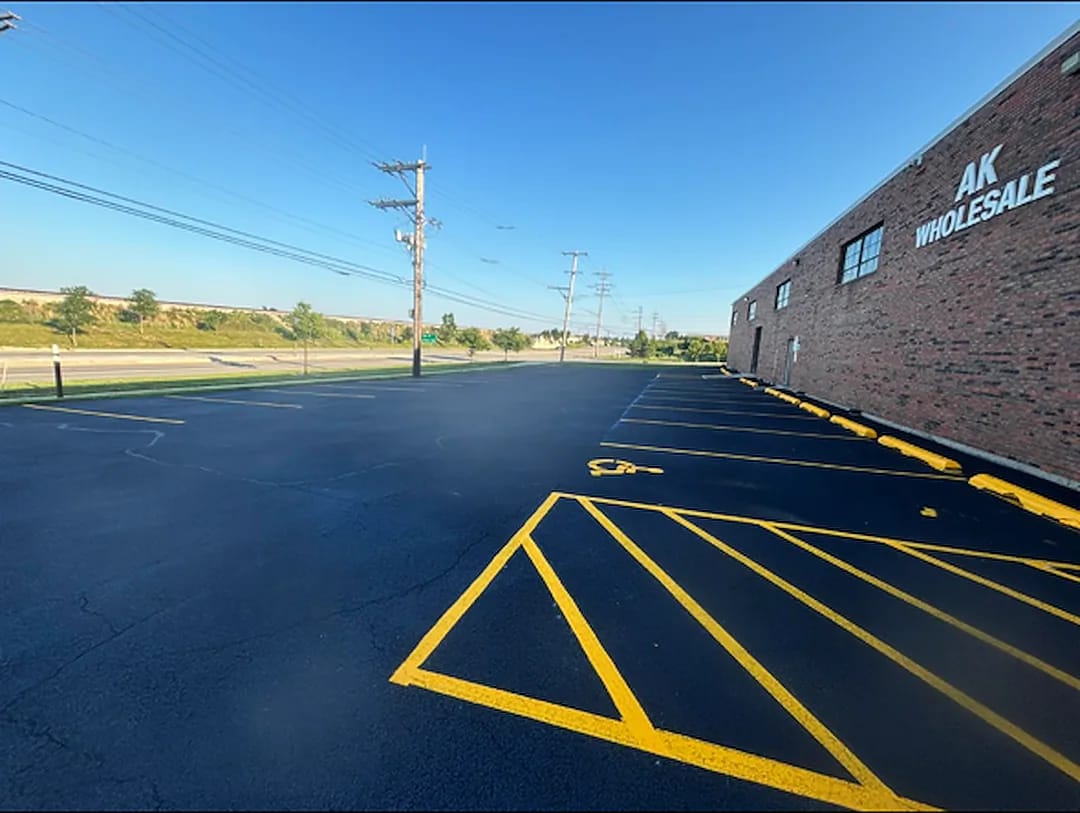
Sealcoat and restripe with new curb stops 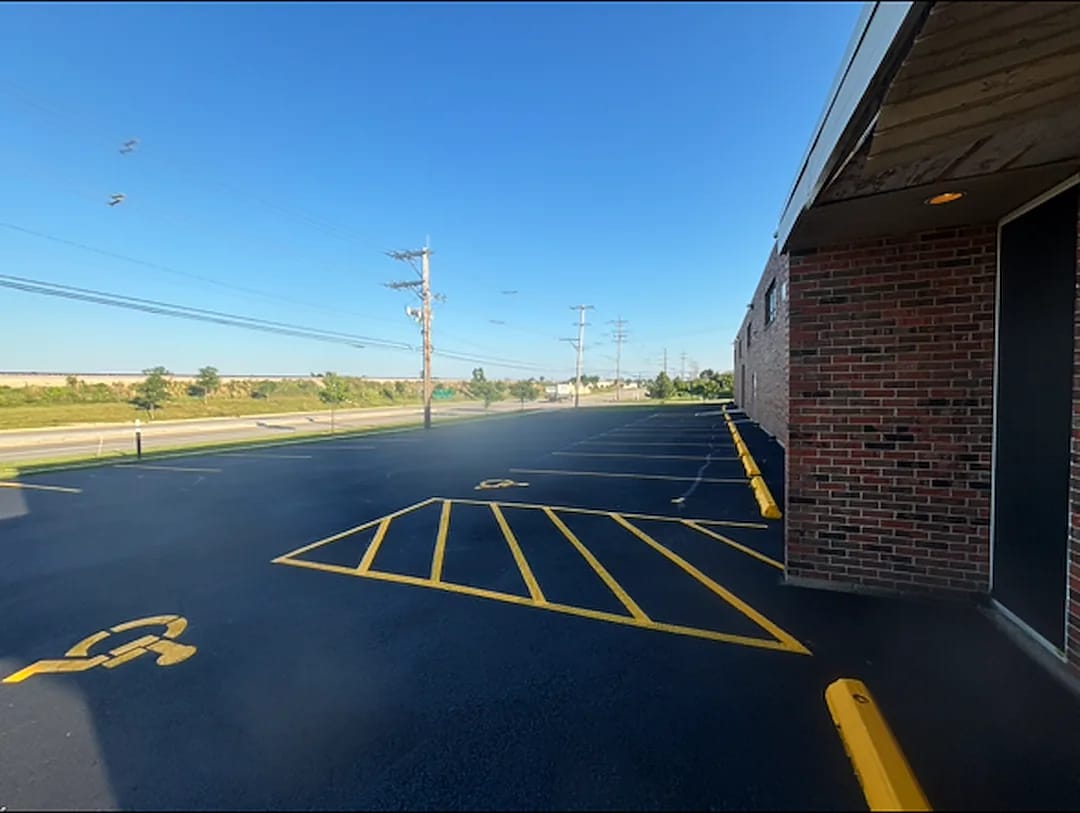
Full restripe with ADA stall and hatched access aisle
FAQ
Questions we get asked
Something not covered? Call (773) 858-1077 and ask.
Sealcoat needs roughly 24 hours to cure before traffic, longer in cool or humid weather. We usually coat in phases — half the lot at a time — so you are never fully closed. Striping goes down after the coating has cured.
Every 2 to 4 years for most commercial lots, driven by traffic volume and how much sun and salt the surface takes. More often than that is money spent on coating you do not need; much less and oxidation gets ahead of you.
No. Sealcoat is a thin protective layer, not a structural repair. Potholes and failed areas get cut out and patched first; then the coating protects the sound surface around them. Anyone offering to sealcoat over potholes is selling you a few months.
Yes. Overnight and weekend work is common for retail and healthcare sites where the lot has to stay usable during the day. Tell us your quiet window and we will phase the job around it.
Sealcoat needs surface temperatures reliably above about 50°F and no rain for 24 hours, so late spring through early autumn. Crack sealing has a wider window and is worth doing in the autumn before the first freeze even if the coating waits until spring.
Further reading
Background on this work
Written for property managers, not for search engines. No sign-up, nothing withheld.
- Maintenance7 min readSealcoating vs. Resurfacing: Which Does Your Lot Actually Need?Sealcoat protects a sound surface. Resurfacing replaces a failed one. Here is how to read the damage in your own lot and tell which problem you actually have.Read
- Seasonal6 min readPreparing Your Chicago Parking Lot for WinterA fall checklist for Chicago commercial lots: seal cracks before the first freeze, keep snow off access aisles, and book before the striping season closes.Read
Free estimate
Get a quote for pavement repair & sealcoating
Quotes within 24 hours. Most jobs scheduled in 3–5 days.